






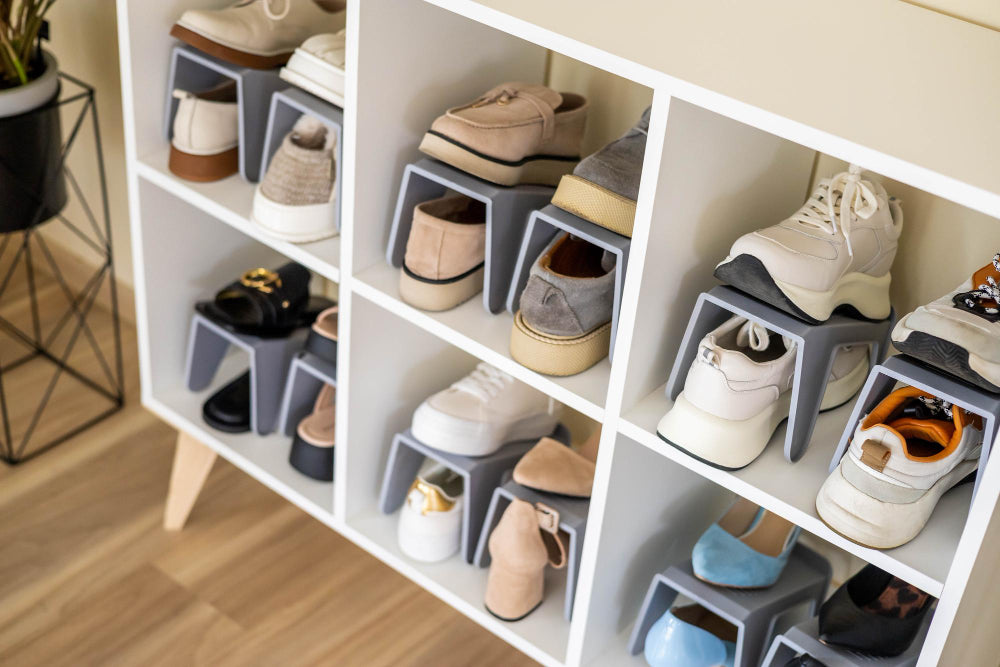
How To Organize A Lot Of Shoes Efficiently
A growing sneaker collection is something to be proud of, but it can get chaotic fast. Boxes piled in corners, pairs scattered across the closet floor, grails buried under everyday beaters. If you have been there, you know how frustrating it gets when you cannot find the pair you need or when a shoe comes out of a box looking worse than when it went in.
At illCurrency, we understand that your kicks are the foundation of your fit. Knowing how to organize a lot of shoes is part of taking that seriously. A well-organized collection means you know what you own, your shoes stay in better condition, and you can build a fit around a specific colorway in seconds instead of a full search.
How To Organize A Lot Of Shoes: Start With a Full Audit
Before you touch a single shelf or buy a single storage box, go through everything you own. Pull out every pair and divide them into categories:
- Daily wearers: pairs you reach for regularly and need quick access to
- Occasional pairs: shoes worn a few times a season or for specific fits
- Special occasion or grail pairs: limited editions, collabs, OG colorways that need more protection
- Pairs to sell or donate: anything with worn-out soles, poor condition, or pairs that never actually get worn
Cutting the collection down to what you genuinely wear and value makes the organization step much more manageable. It also means the storage system you set up actually works. Once you have sorted everything, wipe down each pair and let them dry fully before putting them into storage. Dirt and moisture locked into storage will damage your kicks over time.
Separate Your Grails From Your Rotation
This is the most important rule for any serious collector. Your Jordan collabs and limited drops deserve different treatment than your everyday beaters. Daily rotation pairs should live at eye level and within easy reach. Grails need dedicated protection from dust, light, and humidity.
Clear drop front shoe boxes are the go-to solution for most sneakerheads. They let you see exactly what is inside without opening anything. Stacking vertically saves floor space. Some versions have magnetic or side-drop doors, so you can pull a pair from any level without disturbing the stack. Clear plastic also keeps dust out far better than the original cardboard boxes. Cardboard degrades over time and can transfer acids to your shoes, causing discoloration, especially on white or icy soles.
For your most prized pairs, dedicated acrylic display cases with UV protection are worth considering. These keep the shoe fully visible, dust-free, and shielded from the light exposure that yellows midsoles and fades materials.
Pick an Organization System and Stick To It
There is no single correct way to organize a collection, but there is a right system for how you personally use yours. The key is consistency. A few approaches that work well:
- By wear frequency: Most-worn pairs at eye level and at the easiest reach. Special occasion heat is stored at a higher temperature or in protected boxes. This saves time on busy mornings and reduces unnecessary handling of pairs you rarely reach for.
- By colorway: Group shoes by color family. When you are building a fit around a specific Nike colorway and need to see everything in that palette at once, this system makes it instant. At illCurrency, this is the approach that makes the most sense for sneakerheads building coordinated fits from the kicks up.
- By brand or silhouette: Keep Jordans together, Dunks together, Adidas together, New Balances together. Useful if you tend to build fits around a specific silhouette or brand aesthetic.
- By season: Rotate seasonal pairs in and out of active storage. Winter-appropriate pairs stay accessible through the colder months. Lighter colorways and materials come forward in warmer seasons. Off-season shoes go into protected storage rather than taking up prime space.
Whichever system you choose, commit to it and make sure everything returns to its proper place after each wear.
Use Vertical Space Whenever Possible
Not everyone has a dedicated shoe room or walk-in closet. Vertical storage is the answer for smaller spaces. A tall vertical shoe rack takes up minimal floor space and can hold a serious number of pairs when stacked properly. Over-the-door organizers work well for lighter everyday pairs and free up the entire closet floor space. Corner shelves use dead space in a room that would otherwise go to waste.
Floating wall shelves turn your collection into a display. One pair per shelf, arranged by colorway or brand, with LED strip lighting underneath, makes the whole setup look boutique-level. This works especially well for statement pairs and collabs that deserve to be seen. Modular sneaker walls with adjustable racks take this further for larger collections and let you reorganize as the collection grows.
Protect What You Store
Storage is only useful if it keeps your shoes in good condition. A few habits make a real difference over time:
- Shoe trees: Maintain shape in leather pairs and higher-end sneakers, preventing creasing and collapse during storage
- Silica gel packets: Drop one into each shoe before storing to prevent moisture buildup, mold, and odor, essential in humid climates
- Acid-free tissue paper: Use this instead of original box tissue for long-term storage to avoid discoloration over time
- Label everything: Large collections in opaque or stacked boxes need clear labels or photos on the outside, so you are not opening boxes to find a pair
- Keep away from direct sunlight: UV exposure yellows soles and fades materials, especially on white or light colored pairs
Keep Your Rotation Moving
A stored sneaker is not a preserved sneaker if it never gets worn. Midsoles degrade when left idle for long periods. Wearing each pair at least occasionally keeps the materials supple and the adhesives from breaking down. Rotate pairs in and out of active wear to spread use across the collection and keep everything in better shape in the long term.
A Clean Collection Makes Every Fit Easier
Organized shoes mean organized fits. When you can see every pair, find the right colorway in seconds, and know your kicks are in good condition, putting together a look becomes a lot more enjoyable. The sneaker anchors the outfit, and everything else builds around it.
Want help finding a tee that matches your rotation? Contact us today.